
Call us now :07971459236
 Send Inquiry
 Send Inquiry
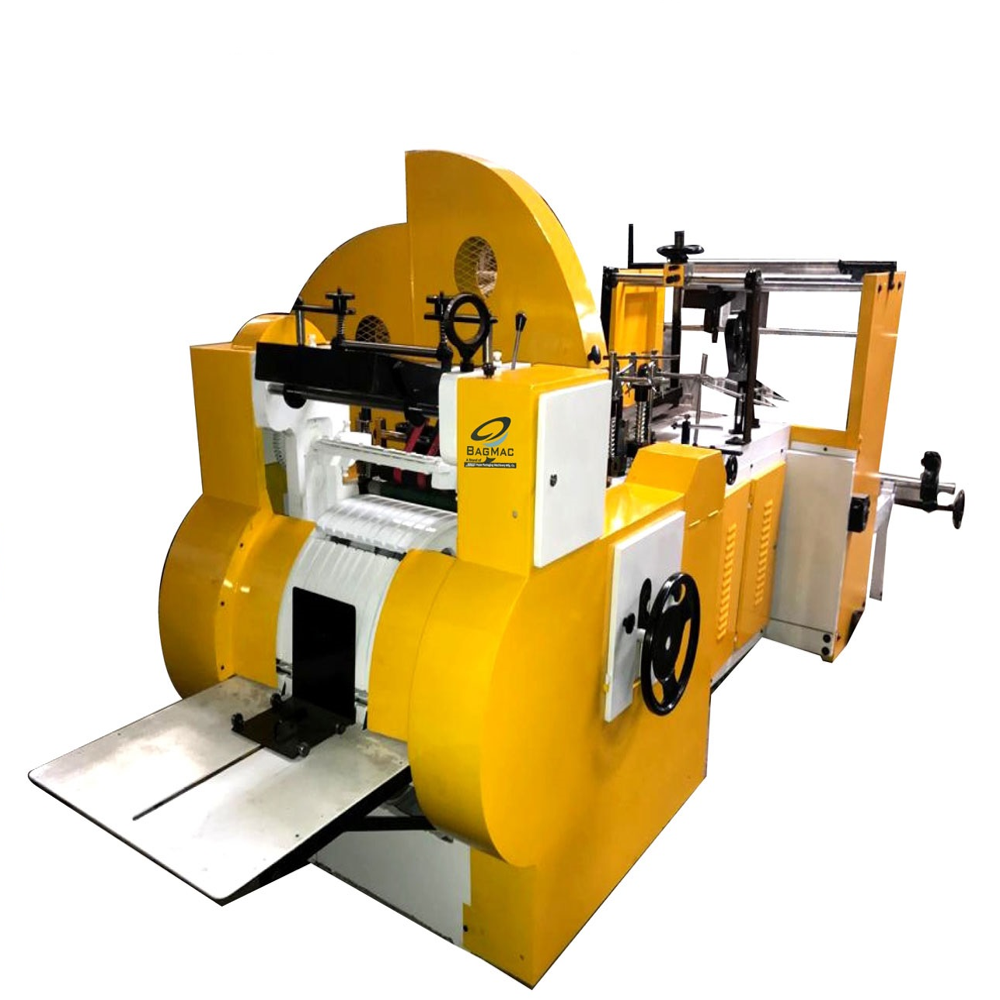
Fully Automatic Paper Bag Making Machine
Price 47500 INR/ Set
MOQ : 1 Set
Fully Automatic Paper Bag Making Machine Specification
- Product Type
- Fully Automatic Paper Bag Making Machine
- General Use
- Manufacturing paper bags with automatic operation
- Efficiency
- High efficiency up to 180 bags per minute
- Weight (kg)
- Approx. 3000 kg
- Automatic Grade
- Fully Automatic
- Drive Type
- Electric
- Bag Type
- Shopping Bags, Grocery Bags, Food Bags
- Computerized
- Yes
- Photoelectric Correction
- Yes
- Film Length Counter
- Yes
- Bag Length
- 180 mm to 460 mm (adjustable)
- Power
- Approx. 7.5 kW
- Voltage
- 380 V, 3 Phase, 50/60 Hz
- Material
- Kraft paper, art paper, laminated paper
- Dimension (L*W*H)
- 8500 mm x 2100 mm x 1800 mm
- Feature
- Touchscreen operation, automatic counting, high-speed servo control
- Color
- Industrial Grey with blue accents
- Operator Required
- 1 (minimum operator)
- Max Roll Diameter
- 1200 mm
- Bag Width Range
- 70 mm to 320 mm (adjustable)
- Paper Thickness
- 35-150 gsm
- Stacking System
- Automatic bag collection and counting
- Air Pressure Requirement
- 0.6 MPa
- Glue System
- Automatic hot melt glue applying
- Machine Speed
- Up to 180 bags/min
- Bottom Width Range
- 30 mm to 130 mm
- Control System
- PLC and touch screen
- Max Roll Width
- 900 mm
- Noise Level
- 75 dB
Fully Automatic Paper Bag Making Machine Trade Information
- Minimum Order Quantity
- 1 Set
- Supply Ability
- 3 Sets Per Month
- Delivery Time
- 30 Days
About Fully Automatic Paper Bag Making Machine
Fully Automatic Paper Bag Making Machine is a heavy duty industrial unit which makes it very easier to make large number of high quality kraft bags in various customizable lengths as per the requirement. It can be easily controlled by a single operator with the help an electrical control panel. The structural frame and the component parts of this machine are manufactured by using heavy duty engineering materials which imparts greater strength and rigidity for longer service life.
Advanced Automation for Consistent Quality
Equipped with PLC and touchscreen controls, this machine offers fully automated operation, from paper feeding to bag stacking. The system ensures precise alignment thanks to photoelectric correction, reducing manual intervention and error. Its automated glue application and counting systems streamline production, guaranteeing consistent and high-quality paper bags suited for various uses, such as retail and food packaging.
Versatile Bag Production for Multiple Applications
With adjustable bag width (70320 mm), bottom width (30130 mm), and bag length (180460 mm), this machine accommodates a wide range of product needs. It efficiently handles various kinds of paper, including kraft, art, and laminated papers, making it suitable for manufacturing shopping, grocery, and food bags in a single setup. This flexibility enables manufacturers to cater to diverse customer demands.
High Efficiency and User-Friendly Operation
Operating at speeds of up to 180 bags per minute, the machine maximizes productivity while maintaining low noise levels ( 75 dB). The intuitive touchscreen interface provides easy access to all settings, enabling quick adjustments and monitoring even by a single operator. The advanced servo control and robust build ensure reliable performance and minimal downtime, contributing to high operational efficiency.
FAQs of Fully Automatic Paper Bag Making Machine:
Q: How does the fully automatic paper bag making machine increase manufacturing efficiency?
A: The machine streamlines the entire bag-making process, featuring automatic feeding, hot melt glue application, bag collection, and counting. With a speed of up to 180 bags per minute and user-friendly touchscreen control, it significantly reduces manual labor and production time, allowing a single operator to oversee high-volume operations.Q: What types and sizes of bags can be produced with this machine?
A: You can produce shopping, grocery, and food bags within a bag width range of 70320 mm, bottom width range of 30130 mm, and adjustable bag lengths of 180460 mm. The machine is compatible with kraft, art, and laminated paper, supporting paper thickness from 35150 gsm.Q: When should I choose this machine over semi-automatic bag makers?
A: This fully automatic paper bag making machine is ideal when your business requires high-volume, consistent quality output with minimal operator intervention. Its automation, high speed, and sophisticated control features make it suitable for manufacturers aiming to boost efficiency, reduce errors, and scale production.Q: Where is this machine typically used?
A: It is commonly used in factories, industrial workshops, and commercial packaging production units, especially by manufacturers, exporters, traders, and suppliers in the shopping, grocery, and food packaging sectors.Q: What is the process for setting up and operating the machine?
A: Install the machine on a stable floor, ensure proper 380V, 3-phase power supply, and connect the compressed air line (0.6 MPa). Load the appropriate paper roll (up to 900 mm width), input the desired bag dimensions via the touchscreen, and let the PLC-controlled system manage feeding, forming, gluing, and stacking. Minimal manual intervention is required throughout operation.Q: What are the main benefits of using this paper bag making machine?
A: Users benefit from high productivity, precise control, low noise operation, and adaptable settings for various bag types and sizes. The automatic glue, counting, and stacking systems enhance efficiency, while the robust build and computerized controls reduce downtime and maintenance costs.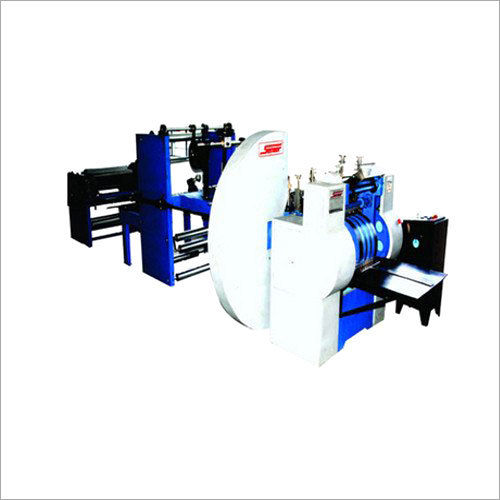
Tell us about your requirement

Price:
Quantity
Select Unit
- 50
- 100
- 200
- 250
- 500
- 1000+
Additional detail
Mobile number
Email

More Products in Bag Making Machine Category
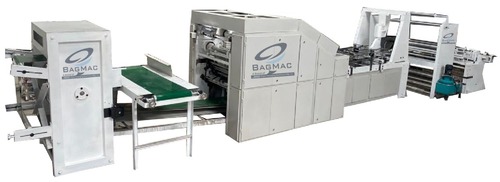
Automatic Square Bottom Paper Bag Making Machine
Price 4500000 INR / Set
Minimum Order Quantity : 1 Set
Product Type : Automatic
Automatic Grade : Automatic
General Use : Flat Bottom Paper Bag Forming Machine
Voltage : 380440 Volt (v)
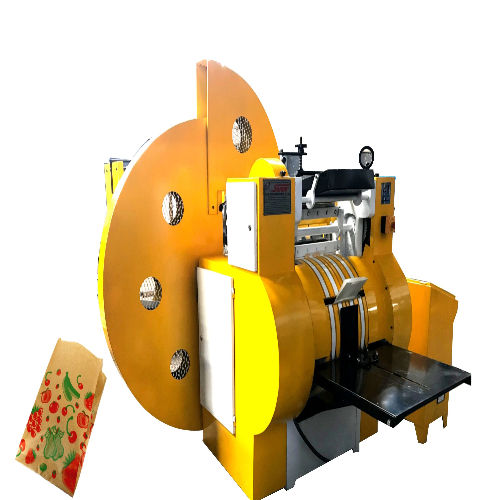
Food Paper Bag Making Machine with Four Color Printing
Price 760000.00 INR / Set
Minimum Order Quantity : 1 Set
Product Type : Semi Automatic
Automatic Grade : Semi Automatic
General Use : Paper Bag Forming Machine
Voltage : 220380 Volt (v)
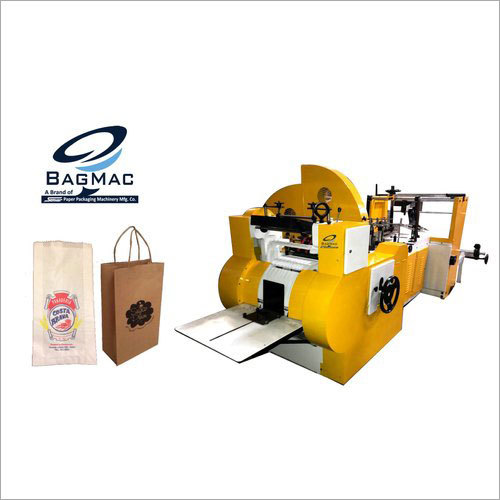
Heavy Duty Paper Bag Making Machine
Price 475000.0 INR / Set
Minimum Order Quantity : 1 Set
Product Type : Heavy Duty Paper Bag Making Machine
Automatic Grade : Automatic
General Use : Manufacturing heavy duty paper bags for industrial packaging
Voltage : 380V / 50Hz, 3 Phase
Heavy duty Automatic Paper bag making machine
Price 475000.0 INR / Number
Minimum Order Quantity : 1 Number
Product Type : Paper Bag Making Machine
Automatic Grade : Semi Automatic
General Use : Industrial
Voltage : 220415 Volt (v)

 Send Inquiry
Our Products
- Bag Making Machine
- Corrugated Box Machine
- Creasing & Cutting Machine
- Die cutting machine
- Lamination Machine
- Punching Machine
- Sheet Pasting Machine
- Cutting Creasing & Slotting Machine
- Paper Roll To Sheet Cutting Machine
- Box Making Machine
- Folder gluer machine
- Hydraulic Shaftless Mill Roll Stand
- Creaser Slotter Machine
- Thin Blade Slitter Scorer Machine
- Die Embossing Machine
- Twin Shaft Self Loading Reel Stand
- Corrugation Machine
- Paper Converting Machinery
- Corrugated Sheets making machine
- Flexo Printing Machinery
- Flexo Printer Slotter Machine


Senior Tower, Opp. Sant Petrol, G.T. Road, Daburji, Amritsar - 143105, Punjab, India

Mr Kawaljit Singh
(Managing Partner)
Mobile :07971459236
 Send Inquiry
 Send SMS
Developed and Managed by Infocom Network Private Limited.
